Marco-Hugo Landeta Vacas
September 8, 2026
7
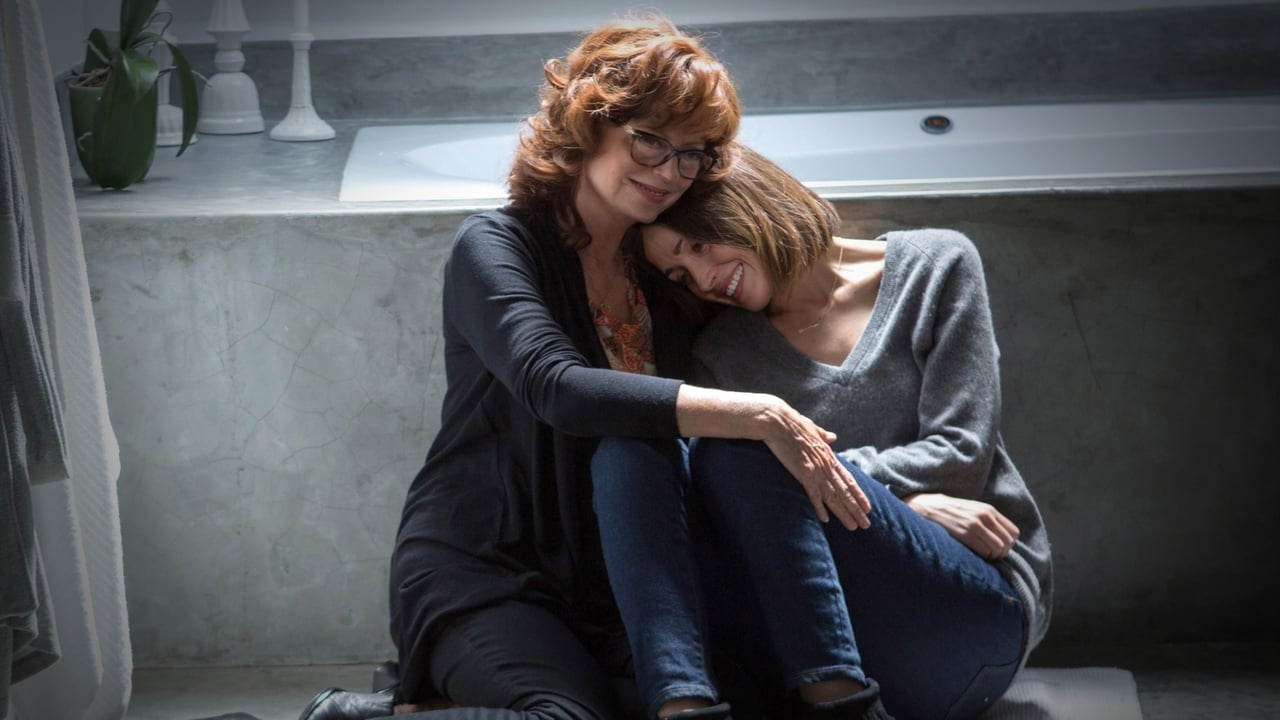
(CASTELLANO) Al principio, Marnie puede parecer simplemente una madre insoportable.
Llama demasiado.
Pregunta demasiado.
Aparece demasiado.
Quiere saberlo todo.
Y cuando su hija intenta marcar cierta distancia, ella parece completamente incapaz de entender que existe una frontera entre preocuparse por alguien y ocupar prácticamente toda su vida.
Pero Una madre imperfecta sería una película bastante peor si se quedara solamente ahí.
Porque Marnie no es únicamente una madre entrometida.
Está sola.
Y no sabe muy bien qué hacer con eso.
Ahí es donde Susan Sarandon convierte un personaje que podría haber sido una caricatura en algo mucho más humano.
Marnie acaba de perder a su marido y parece haber decidido combatir el vacío llenando cada minuto.
Si Lori no responde, llama otra vez.
Si alguien necesita ayuda, ella aparece.
Si nadie necesita ayuda, encuentra a alguien que probablemente la necesite.
Dinero.
Consejos.
Compañía.
Favores.
Marnie reparte constantemente algo de sí misma porque quizá detenerse significaría tener que pensar demasiado en lo que ha perdido.
Eso cambia completamente la película.
Y Sarandon lo borda.
Tiene una energía enorme, pero detrás de toda esa actividad siempre aparece algo ligeramente triste.
Puede resultar agotadora y adorable prácticamente en la misma escena.
Rose Byrne es perfecta como antítesis.
Lori quiere exactamente aquello que su madre parece incapaz de darle:
espacio.
Y entiendo perfectamente a las dos.
Ese es uno de los grandes aciertos de Lorene Scafaria.
La película no necesita convertir a ninguna en culpable.
Desde el punto de vista de Lori, veinte llamadas no son amor.
Son veinte llamadas.
Una madre entrando continuamente en tu vida cuando estás intentando reconstruir la tuya.
Pero desde el punto de vista de Marnie, llamar significa seguir teniendo a alguien a quien cuidar.
Y probablemente seguir sintiendo que todavía hay una vida que organizar.
La relación funciona porque ambas están pasando por algo que no saben resolver juntas.
Lori intenta alejarse.
Marnie intenta acercarse todavía más.
Y Rose Byrne hace algo muy difícil: interpreta el cansancio sin convertir a Lori en una hija cruel.
Está irritada.
A veces enfadada.
Incluso puede parecer injusta.
Pero entiendes perfectamente por qué necesita respirar.
Por eso algunos pequeños momentos funcionan mejor que las grandes escenas.
El lío con el test de ovulación, por ejemplo, consigue algo que resume perfectamente el tono de la película.
Es absurdo.
Es divertido.
Y de pronto es tremendamente tierno.
Me hizo reír.
Y casi al mismo tiempo me emocionó.
Eso es exactamente lo que mejor hace Una madre imperfecta: utilizar la comedia sin esconder que debajo hay personas intentando sobrevivir emocionalmente a cosas bastante serias.
También me gusta mucho que la película deje que Marnie empiece a construir relaciones que no dependen exclusivamente de Lori.
Ahí la historia empieza a abrirse.
Porque su problema no consiste únicamente en aprender a dejar tranquila a su hija.
Consiste en descubrir quién es cuando ya no puede definirse solo como esposa y madre.
Eso me parece mucho más interesante.
J.K. Simmons entra además con el tono perfecto.
No necesita competir con Sarandon.
Hace exactamente lo contrario.
Es tranquilo.
Observa.
Habla cuando tiene algo que decir.
Y esa calma funciona muy bien frente al torbellino permanente de Marnie.
Hay una química agradable precisamente porque la película no intenta convertirla inmediatamente en otra historia romántica gigantesca.
Marnie necesita primero aprender a estar en su propia vida.
Y alrededor aparecen otros personajes que permiten ver algo muy bonito del personaje.
Cuando deja de concentrar toda su energía en Lori, esa tendencia a meterse en la vida de los demás empieza a revelar también una virtud.
Marnie ayuda.
Se preocupa.
Escucha.
Da cosas sin esperar demasiado a cambio.
El mismo rasgo que puede asfixiar a su hija puede resultar maravilloso cuando encuentra el lugar adecuado.
Eso está muy bien observado.
La película tampoco es perfecta.
Hay situaciones demasiado construidas como comedia.
Algunos secundarios aparecen más como oportunidades para que Marnie aprenda algo que como personajes completos.
Y por momentos Scafaria simplifica demasiado ciertas emociones.
Una madre imperfecta empieza pareciendo una comedia sobre una madre que no sabe cuándo dejar en paz a su hija.
Termina siendo algo bastante más bonito.
Una película sobre qué ocurre cuando has pasado tantos años cuidando a otras personas que, de repente, tienes que aprender a cuidarte a ti misma.
Sobre una hija que necesita separarse un poco para poder seguir queriendo a su madre.
Y sobre una madre que tiene que descubrir que dejar ir no significa desaparecer.
Susan Sarandon está magnífica.
Rose Byrne le responde de maravilla.
Y entre las dos consiguen que una comedia aparentemente pequeña tenga bastante más dentro de lo que parece.
Agridulce.
Divertida.
Y, cuando menos lo esperas, muy emotiva.
(ENGLISH) At first, Marnie can simply seem unbearable.
She calls too much.
Asks too much.
Shows up too much.
She wants to know everything.
And when her daughter tries to establish some distance, Marnie appears completely incapable of understanding that there is a boundary between caring about someone and practically occupying their entire life.
But The Meddler would be a much weaker movie if that were all she was.
Marnie is not simply an intrusive mother.
She is lonely.
And she does not really know what to do with that.
That is where Susan Sarandon turns a character who could easily have become a caricature into something far more human.
Marnie has lost her husband and seems determined to fight the emptiness by filling every minute of her life.
If Lori does not answer, she calls again.
If someone needs help, Marnie appears.
If nobody needs help, she finds someone who probably does.
Money.
Advice.
Company.
Favors.
She is constantly giving pieces of herself away because perhaps stopping would mean having to think too much about what she has lost.
That changes the entire film.
And Sarandon is wonderful.
She brings enormous energy to Marnie, but there is always something slightly sad beneath all that movement.
She can be exhausting and lovable in almost the same moment.
Rose Byrne is the perfect opposite.
Lori wants exactly the one thing her mother seems unable to give her:
space.
And I understand both of them.
That is one of Lorene Scafaria's strongest choices.
The film never needs to make either woman the villain.
From Lori's point of view, twenty phone calls are not love.
They are twenty phone calls.
A mother constantly entering your life while you are trying to rebuild your own.
But from Marnie's point of view, calling means still having somebody to care for.
Perhaps it means still feeling that there is a life she can organize.
Their relationship works because both women are dealing with something they do not know how to solve together.
Lori pulls away.
Marnie moves closer.
Rose Byrne does something especially difficult: she plays exhaustion without turning Lori into a cruel daughter.
She is irritated.
Sometimes angry.
She can even seem unfair.
But you completely understand why she needs room to breathe.
That is why some of the smaller moments work better than the bigger scenes.
The ovulation-test mix-up, for example, captures the movie's tone perfectly.
It is absurd.
It is funny.
And then suddenly it is incredibly tender.
It made me laugh.
And almost immediately afterwards it moved me.
That is what The Meddler does best: it uses comedy without pretending that the people underneath it are not dealing with genuinely painful things.
I also like that the movie gradually allows Marnie to build relationships that do not depend entirely on Lori.
That is when the story begins to open up.
Because her real problem is not simply learning to leave her daughter alone.
It is discovering who she is when she can no longer define herself only as a wife and mother.
That is much more interesting.
J.K. Simmons also enters the film with exactly the right tone.
He does not try to compete with Sarandon.
He does almost the opposite.
He is calm.
He watches.
He speaks when he has something to say.
That quietness works beautifully against Marnie's permanent whirlwind.
Their chemistry is appealing precisely because the film does not immediately try to turn it into some enormous romantic storyline.
Marnie first has to learn how to exist inside her own life.
The people around her also reveal something rather lovely about her.
Once she stops directing all her energy toward Lori, the same tendency to interfere in other people's lives begins to look like a virtue too.
Marnie helps.
She cares.
She listens.
She gives without demanding very much in return.
The exact quality that can suffocate her daughter can become wonderful when it finds the right place.
That is very well observed.
The film is not perfect.
Some situations feel too deliberately constructed as comedy.
Several supporting characters function more as opportunities for Marnie to learn something than as fully developed people.
And Scafaria occasionally simplifies emotions that could have been more complex.
The Meddler begins looking like a comedy about a mother who does not know when to leave her daughter alone.
It becomes something considerably more touching.
A film about what happens when you have spent so many years caring for other people that suddenly you have to learn how to care for yourself.
About a daughter who needs some distance in order to keep loving her mother.
And about a mother who has to discover that letting go does not mean disappearing.
Susan Sarandon is terrific.
Rose Byrne gives her exactly the right counterweight.
And together they make a seemingly small comedy contain much more than it initially appears to.
Bittersweet.
Funny.
And, when you least expect it, genuinely moving.